
Sri Lanka has two monsoons, not one, which means there's always somewhere on the island in season. Here's how the weather works, month by month and coast by coast, so you can plan the perfect trip.
Ask most people when to visit Sri Lanka and they'll say "December to March". They're not wrong — but they're only telling half the story. Sri Lanka is a small island with two separate monsoon seasons that hit opposite coasts at different times of year. The happy result: whenever you travel, somewhere on the island is sunny, calm and at its best.
Here's how it works, and how to plan around it.
The short answer
December to March is the best time for the west coast, the south coast, the Cultural Triangle and the hill country. April to September is the best time for the east coast. October and November are the in-between months — greener, quieter and usually showery in the afternoons.
The two monsoons, explained simply
The south-west monsoon (roughly May to September) brings rain to the west coast, the south coast and the hill country. Colombo, Galle, Mirissa and Bentota are wetter and the sea is rougher — while the east coast enjoys its driest, sunniest months.
The north-east monsoon (roughly November to February) brings rain to the north and east — Jaffna, Trincomalee and Pasikudah — while the west and south settle into blue skies and calm seas.
Between the two, in October–November and again around March–April, there are short "inter-monsoon" periods when showers can fall anywhere, usually as a heavy afternoon downpour followed by clear evenings.
December to March: peak season in the south and west
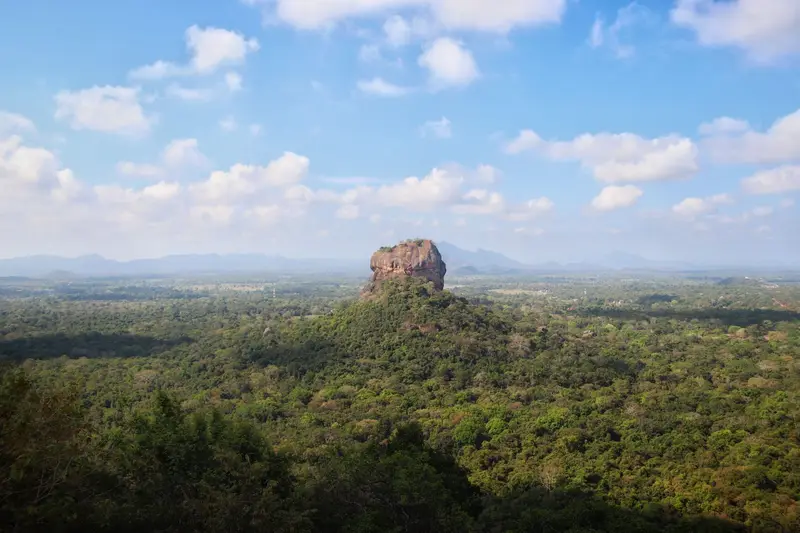
This is classic Sri Lanka weather. The beaches of the south coast are at their best, the sea is calm enough for swimming and snorkelling, and blue-whale watching off Mirissa is in full swing. Up in the hill country, mornings are cool and clear — perfect for tea estates, the famous train ride to Ella and hikes like Little Adam's Peak. The Cultural Triangle (Sigiriya, Dambulla, Polonnaruwa) is dry and pleasant for exploring ancient sites.
It's also the busiest and most expensive time of year, especially over Christmas and New Year, so it's worth planning early. December to May is also the pilgrimage season for climbing Adam's Peak (Sri Pada) at night to watch the sunrise.
April: a festive shoulder month
April is hot and mostly dry, with the occasional afternoon shower as the seasons turn. Mid-April brings the Sinhala and Tamil New Year — a joyful family festival with traditional games, sweets and rituals. Some businesses close for a few days, but it's a wonderful time to see everyday island culture.
May to September: the east coast comes alive
As the south-west monsoon arrives on the other side of the island, the east coast enjoys its best weather. Trincomalee, Nilaveli and Pasikudah have calm, clear water, and Arugam Bay becomes one of Asia's favourite surf spots. Whale and dolphin watching moves to Trincomalee.
Inland, this is a great time for wildlife: in the dry months, elephants gather in large numbers around the reservoirs of Minneriya and Kaudulla — often called "The Gathering" — usually peaking around August and September. Culture lovers can time a visit with the Esala Perahera in Kandy, a spectacular festival of drummers, dancers and decorated elephants that usually falls in July or August.
The west and south coasts are wetter in these months, but rarely rained-out all day — and you'll find greener landscapes, fewer crowds and better hotel rates.
October and November: green, quiet and good value
These inter-monsoon months see the most unpredictable weather, with showers possible anywhere. In return, the island is lush and emerald-green, sites are quiet and prices are at their lowest. With a flexible, private itinerary — built around the drier regions each week — they can be a rewarding time to travel.
Note that parts of Yala National Park usually close for a few weeks around September and October; nearby parks such as Udawalawe stay open.
Region by region at a glance
West and south coast (Colombo, Bentota, Galle, Mirissa): best December to April.
Hill country (Kandy, Nuwara Eliya, Ella): best January to April; clearer views in the mornings year-round.
Cultural Triangle (Sigiriya, Dambulla, Polonnaruwa, Anuradhapura): good most of the year, best January to September.
East coast (Trincomalee, Pasikudah, Arugam Bay): best April/May to September.
North (Jaffna): best February to September.
Wildlife: Yala and Udawalawe are good year-round; Minneriya's elephant gathering peaks around August to September.
So, when should you go?
If you want the classic mix of culture, tea country and southern beaches, plan for January to March. If you'd rather avoid the crowds and see the east coast at its best, go between May and September — and combine it with the Cultural Triangle, which is dry at the same time. And if you're travelling in the shoulder months, a private, flexible route makes all the difference.
That's exactly what we do. Because every SLankaTours journey is tailor-made, we plan your route around the weather — sending you to the sunny side of the island and moving things around if the forecast changes. Tell us when you're free to travel, and we'll design the right Sri Lanka for those dates.